USB Flash Drive Fulfillment for Medical Software and Equipment Manufacturers
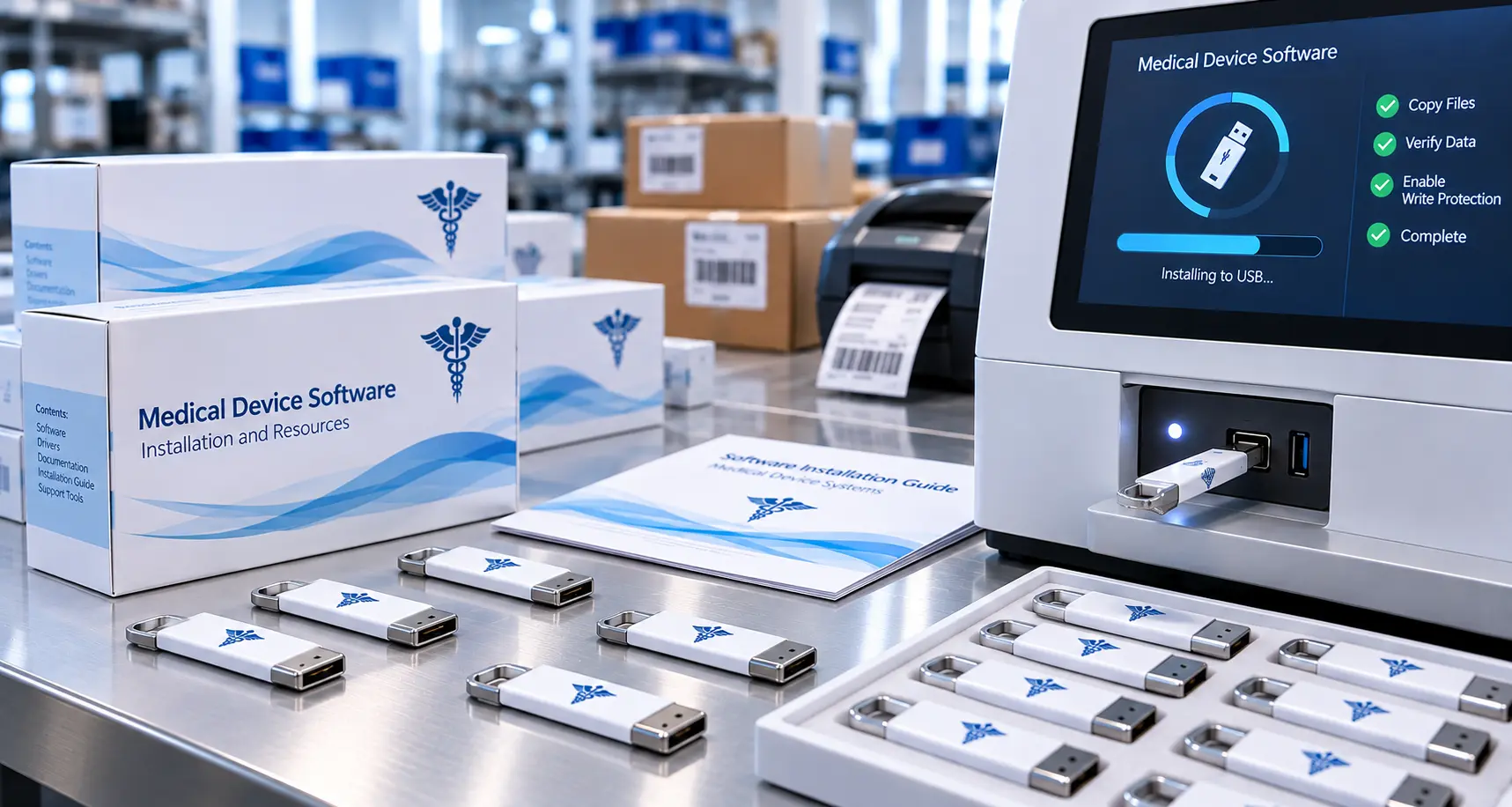
For medical software companies and equipment manufacturers, distributing software on USB flash drives involves more than copying files onto removable media. The process may include selecting compatible USB hardware, loading approved software, verifying the contents, applying hardware write protection, labeling individual devices, and shipping finished products to customers or service locations.
These steps are part of a broader service known as USB flash drive fulfillment. Rather than managing several vendors and performing the duplication process internally, manufacturers can outsource the preparation and distribution of finished USB media.
For certain applications, hardware write protection is an especially important part of this process. However, write protection is not a feature that can be applied to every USB flash drive. It depends on the specific controller technology used inside the device, which makes media selection an important consideration before production begins.
USB Fulfillment Is More Than Copying Files
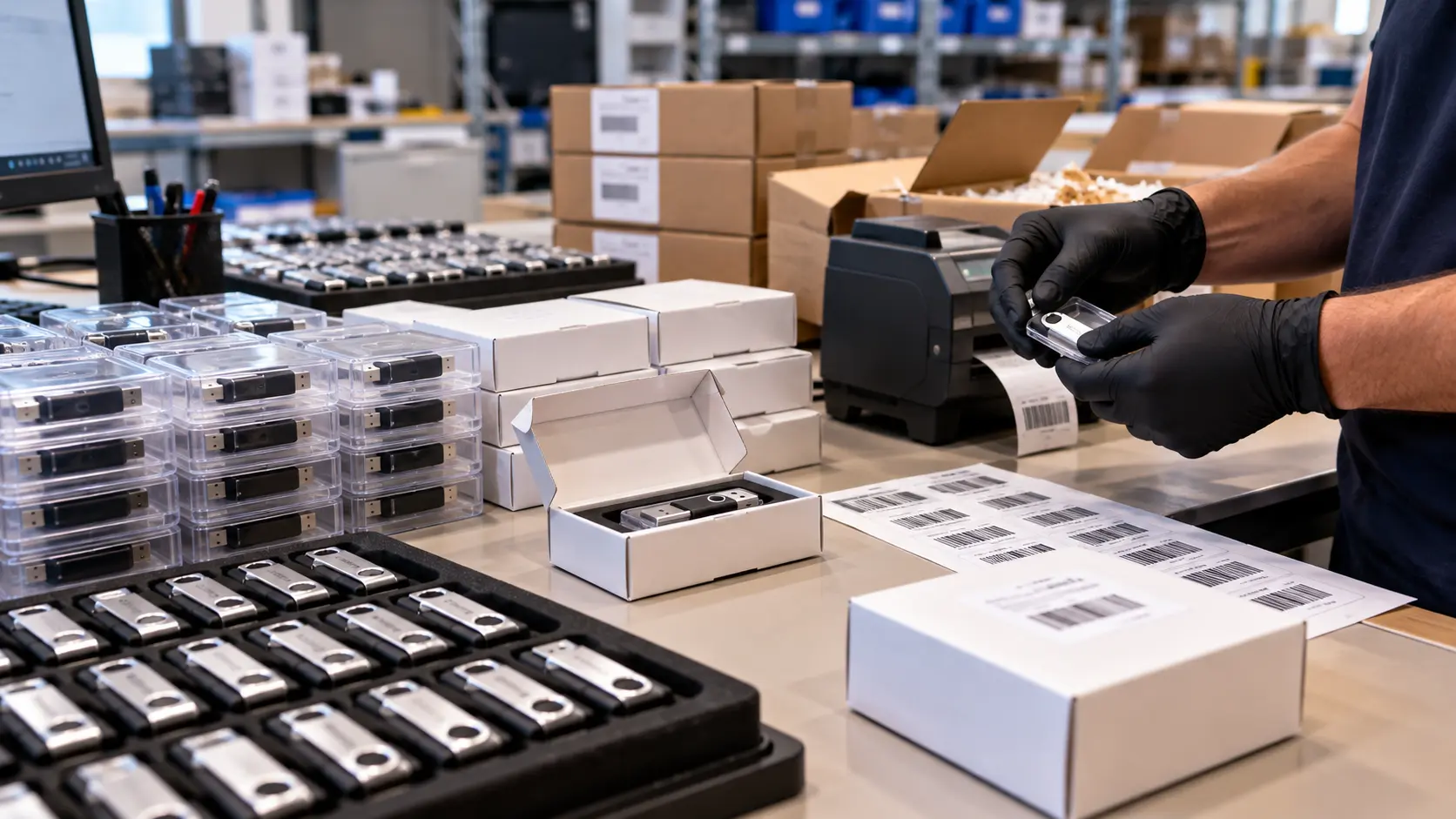
A typical USB fulfillment project begins with the manufacturer’s approved software, firmware, or technical documentation. The fulfillment provider prepares the required quantity of USB flash drives, loads the appropriate data, verifies the contents, and completes any additional processing specified by the customer.
Depending on the project, the finished devices may be packaged in bulk, individually labeled, or shipped directly to customers, technicians, hospitals, and other designated locations.
Some organizations require the same software package on every USB drive. Others may need unique data for each device or individual customer order. A fulfillment process can be designed around either requirement, including recurring production schedules and automated order processing.
For medical software and equipment manufacturers, this approach provides a consistent method of preparing distribution media without requiring internal employees to manage duplication equipment, media inventory, labeling, and shipping.
Why Hardware Write Protection Matters
When a USB flash drive is used to distribute software or firmware, the manufacturer generally wants the information to remain unchanged after production. A conventional USB flash drive does not provide this assurance because the recipient can modify, replace, or delete files stored on the device.
Hardware write protection addresses this issue at the USB controller level. Once properly configured, the controller rejects standard write commands from the connected computer. The files remain readable, but the host system cannot overwrite or erase the protected contents.
This is different from changing file permissions or applying a software-based read-only setting. Controller-level protection is enforced by the USB device itself and does not depend on the operating system respecting a particular file attribute.
For medical equipment manufacturers, this can help preserve an approved software distribution package. For industrial equipment companies, it can protect firmware images, configuration files, and service utilities from accidental modification during field use.
Not Every USB Flash Drive Can Be Hardware Write-Protected
One of the most important considerations is that hardware write protection cannot simply be added to any USB flash drive.
USB flash drives use different controller chips, firmware configurations, and flash memory components. Only certain controller families support the necessary hardware-level write protection features, and the available configuration methods depend on the specific device.
Two USB flash drives may have identical storage capacities and similar external appearances while using completely different internal controller technology. One may support controller-level write protection while the other does not.
This means a manufacturer cannot assume that USB drives purchased from a general retail supplier can later be converted into permanently read-only devices.
For a fulfillment project requiring hardware write protection, the correct media must be identified and qualified before production. The USB controller, firmware capabilities, and intended write protection method all need to be considered.
This is one reason why combining media sourcing, USB duplication, and write protection within the same fulfillment process can be more practical than purchasing flash drives separately and attempting to configure them afterward.
Reducing the Risk of Malware and Software Modification
A standard read/write USB flash drive can accept new files whenever it is connected to a computer with the necessary access permissions. If that computer is infected with malware, the USB drive may become another location where malicious files are stored.
With controller-level hardware write protection enabled, malware cannot write additional files to the protected storage area through normal USB storage commands. The same restriction prevents users from accidentally deleting or replacing the manufacturer’s original software package.
This does not mean that a write-protected USB drive is automatically free of malware. The original files must be checked before the device is placed into its protected state. Write protection also does not prevent unsafe software already stored on the drive from executing.
What it does provide is a method of preventing subsequent changes to the stored information through the standard USB storage interface.
For organizations distributing validated software or firmware, this restriction can be an important part of maintaining consistency between the approved master files and the media delivered to end users.
Medical Industry Considerations: Is a USB Drive a Gift?
Medical device manufacturers and healthcare suppliers may also need to consider policies governing gifts, promotional products, and other items provided to healthcare professionals.
A conventional USB flash drive has value beyond the software or documentation originally supplied by the manufacturer. Once the files are removed, the recipient can reuse the device for personal storage, transferring documents, or other unrelated activities.
That secondary use may raise questions during a company’s compliance review, particularly when the USB drive is being distributed to healthcare professionals rather than sold as part of a commercial product.
A permanently hardware write-protected USB drive is different in its practical function. The recipient cannot erase the manufacturer’s contents or reuse the device as general-purpose storage through normal USB operations. The device remains dedicated to its original purpose of delivering software, firmware, or technical documentation.
This distinction may help a medical manufacturer demonstrate that the USB drive is intended as a necessary distribution medium rather than a promotional storage product.
However, hardware write protection does not automatically establish an exemption from healthcare gift restrictions. Applicable laws, recipient policies, product value, and the purpose of distribution must still be considered by the manufacturer’s compliance team.
Building Write Protection Into the Fulfillment Process
For manufacturers requiring protected media, write protection should be planned as part of the fulfillment workflow rather than treated as a final step that can be performed on any available USB drive.
A typical project may include selecting compatible USB flash drives, preparing an approved master data set, duplicating the required quantity, verifying the copied information, enabling controller-level write protection, and confirming that the finished devices reject unauthorized write attempts.
After production, the USB drives can be labeled, packaged, and shipped according to the customer’s requirements.
For recurring projects, the fulfillment process may also involve maintaining approved software versions, processing incoming orders, and preparing individual shipments with the correct data and identification labels.
At USB Copier, these requirements can be incorporated into a custom USB fulfillment workflow that combines media preparation, duplication, supported hardware write protection, and distribution.
Why Manufacturers Outsource USB Flash Drive Fulfillment
Outsourcing USB fulfillment is not simply about avoiding the task of copying files. It allows manufacturers to consolidate several production responsibilities into a single process.
Media compatibility, duplication accuracy, hardware write protection, device verification, packaging, and shipping can all be addressed before the finished USB drives reach the customer.
This is particularly useful when the application requires specialized USB controllers or when the manufacturer needs a consistent process for recurring software distribution.
For medical software companies and equipment manufacturers, the result is a more controlled method of distributing software without having to manage every production step internally.
Companies evaluating USB flash drive fulfillment, hardware write protection, or specialized duplication requirements can request a USB fulfillment quote to review compatible media options, production quantities, and distribution requirements.
Technical Note: USB controller-level write protection is dependent on the specific flash drive controller, firmware, and media configuration. Not all USB flash drives support this feature. Healthcare compliance considerations discussed in this article are general in nature and should be evaluated against applicable regulations and organizational policies.